Showing posts with label Little Ringed Plover. Show all posts

Wednesday, 7 May 2014

More Migrant Magic

As we move from late April into May the migration continues, with what we often regard as Summer birds beginning to appear. Into this we slide a trip 'Down South' to see family, and a chance to visit a Nightingale 'hotspot' at RSPB Pulborough Brooks.

While these famous visitors look rather drab, their song is beautiful, carrying across the reserve. Nightingales are reputed to be shy and elusive. Hmm... I guess this chap hadn't read the rule book. On at least three occasions while we were visiting this particular character posed in plain view, and relatively close in, less than 20 yards away from an appreciative audience. RSPB staff were on hand to chat and answer questions, and it was good to see a mix of birders, photographers and the more casual visitors all getting such joy from such a confiding bird.
 
Talking of confiding, again at Pulborough, this Swallow sat on a fence just feet away from a visitor's rest area, seemingly unconcerned as people came and went.

While we watched the Swallow, someone came over and said, 'there's a baby adder over here'. Well, itwasn't an adder, but a Grass Snake, and it seemed to be in trouble - it's upper jaw was inside a snail shell, while it's lower jaw seemed caught under the shell. One of the RSPB staff carefully pried the shell away, and the snake was able to slide away unharmed, giving us a demonstration of swimming at it went across the pond.

Regular readers will know of my frustration with those people who hang dog poo sacks in trees. Sadly, not even Surrey nor Sussex are immune from this curse, and it seems I'm not the only person disgusted by this habit - one common has a poster to try and get the message across....
 
 On the way back, we stopped off at London Wetland centre, a WWT site. I hesitate to recommend to anyone that they should venture inside the M25, but if you find yourself in the area, it's a lovely place to go - just make sure you allow plenty of time to appreciate the whole area. Oh, and take a pair of ear-plugs in case you meet the same 'posh' birder that we did in one of the hides. She seemed oblivious to the open windows, and addressed everyone in the hide at the same time, as if giving a lecture. LOOK, THERE'S SIX REDSHANK TOGETHER ON THAT ISLAND!!!! While there's usually no need to whisper, a soft, low voice is a a good idea; not only does it not disturb the birds. it also helps to preserve the sanity of other birders! Grrrr... Never mind, we managed to see this lovely Little Ringed Plover, it's striking markings acting as amazingly good camouflage against the stones, before we finally had to run from the hide, our ears covered!

Being in the South-east meant that we couldn't go long before hearing a strangely exotic sqawk from the skies - they're a splash of colour to us dull Northerner's, but the South-east these birds are becoming an issue - they're not native, but seem to be thriving in our slowly warming climate, and I'm told they can both be destructive of property, and have a tendency to drive out truly native birds. Still, nice to see one or two...
 
Equally colourful, but entirely native, is this Siskin, seen at Vrynwy. Vrynwy is well worth a day out; we were there a few weeks ago, and were treated to a Redstart on a fence by a farm. Be warned though, some of the woodland walks are a bit steep when you're feeling a mite unfit, Good cardiac exercise!


Returning to migrants, for the first time we've been able to pick out Garden Warblers from Blackcaps, and managed to get some sightings as a result. The song of a Garden Warbler is longer and bubblier. Of course, once you've seen the singing bird, the difference is immediately apparent, so striking are the blackcaps. The Gardens are more plain, but have a grey mark behind the heads. This example is from Pensychnant - the place to go if you want peace and quiet in North Wales on a Bank Holiday! Also heard calling was a cuckoo, sadly not seen.
 
Finally a return to local pastures, and still some more migrants. The first a female Whincat posing on a fence near the salubrious surroundings of Neston Sewage farm. Though disturbed twice by passing dog-walkers, she clearly liked this fence, returning each time. While watching from a distance, I became aware of a movement much closer, barely 5 yards away; a Wheatear was scuttling across right in fron of me, and quite happy to stop and pose for a few moments... The last is a Whitethroat; the scrub behind the sewage farm was alive with this charismatic bird, all finding convenient bush-top perches from which to loudly proclaim their territories

Finally a brief note; there have been complaints in the media of over-enthusiastic birders and photographers using tape-luring - playing back calls of birds in order to provoke a territorial display. For the record, I don't use tape-luring, and the majority of my photos are taken from a distance using maximum zoom.

Sunday, 5 May 2013

Spring has finally sprung

What a difference a few weeks make - a bit of warmth and things begin to change.
 
Those who have wintered here have begun to change into their summer clothes, and the migrants have begun to pour in... and pour out too..
 
Early in April this little chap was still present on Deeside, a Water Pipit showing off breeding plummage, a delicate pink underneath that the photo doesn't do justice to.
Talking to a local birder, there have been one or two of these scarce birds present in a specific small  area since at least the 1920's when they were first recognised. Obviously it's not the same bird each year - they would be almost 90!! And yet it seems that somehow the knowledge of this wintering ground has been passed on. How wonderful, and yet how fragile. I've not heard anything of this bird since, so presume he is on his way to his summer in the high mountains of Southern Europe.
 
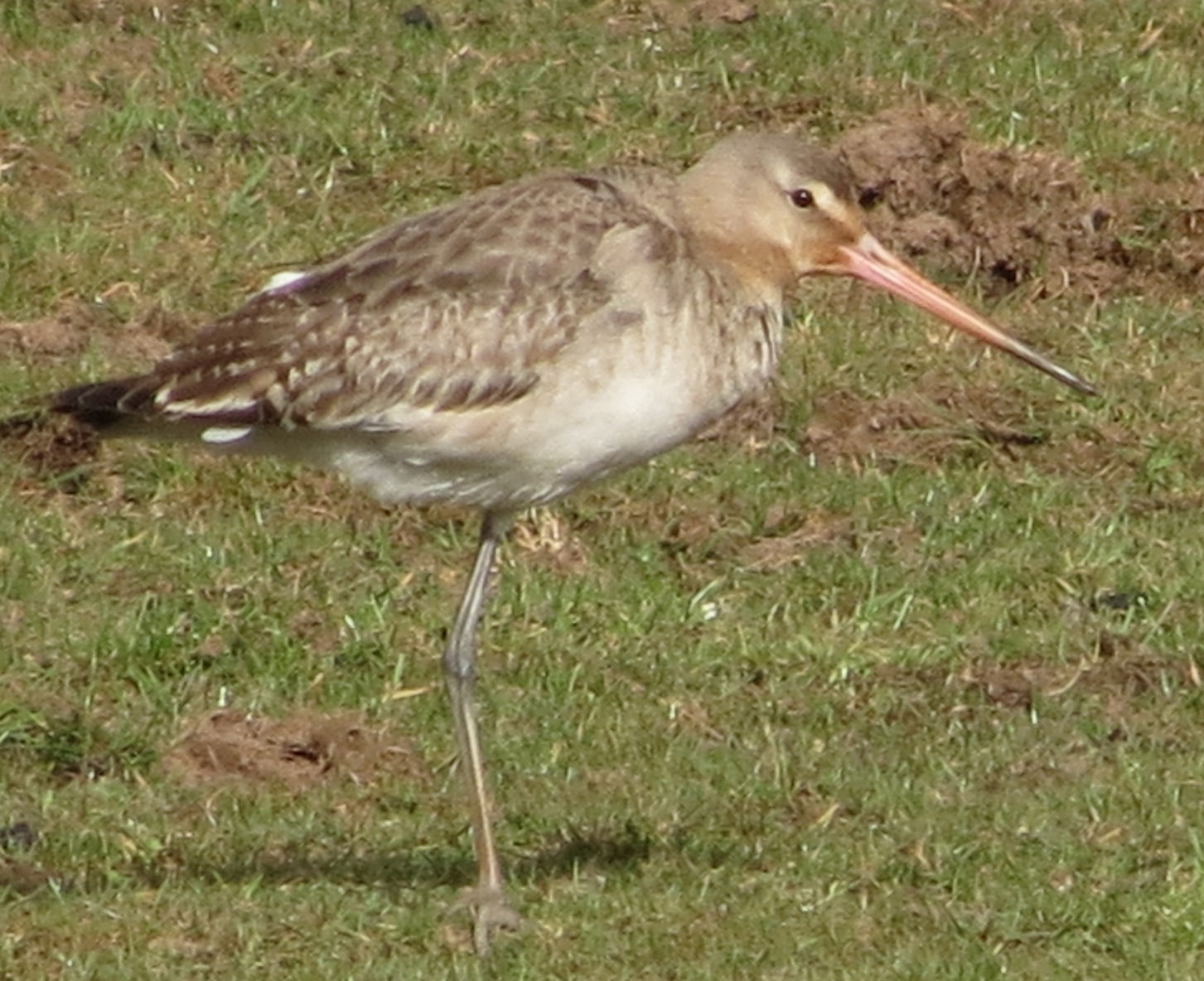
I'd never really appreciated before how much birds change their plummage through the year. This Black-tailed Godwit has just begun to change, developing a browny-red around his head. These are a threatened species, yet in the Deeside/Wirral/South Lancs area they are one of our more common wading birds; a marker of how important the era is for wildlife, and how important it is to protect them.

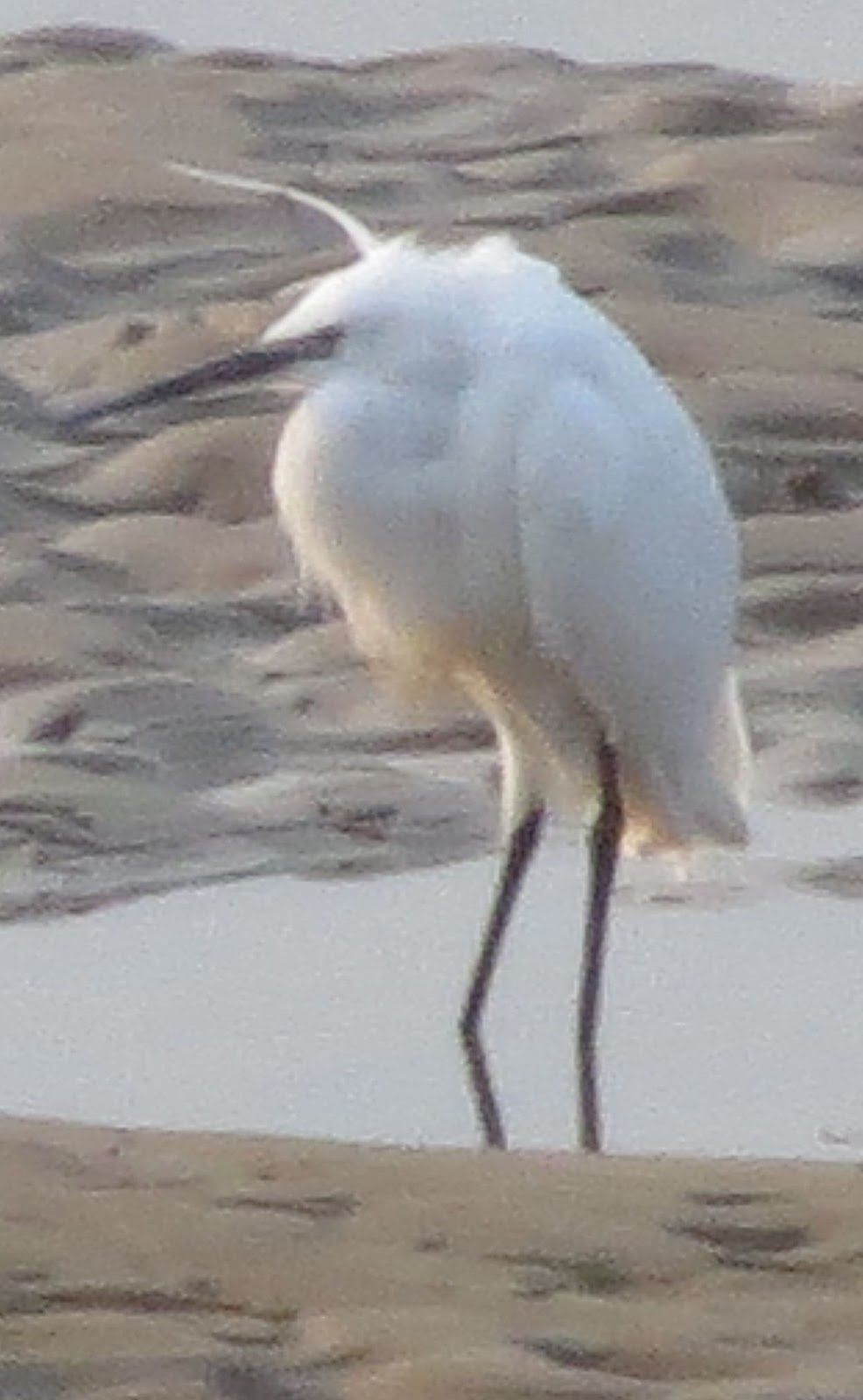
Talking of markers, here is another one. While this particular bird looks a bit chilly, the Little Egret has been steadily moving into Britain from the Continent, probably as a result of Global warming. Twenty years ago they were occasional visitors; now there are some 70-80 breeding down at RSPB Burton Mere Wetlands. Each morning they disperse around the area, returning at dusk.

Evening walks have shown up many of the returning migrants; the local paddocks being a favourite for many small birds dropping in for a quick refill and a night's rest before continuing their journey. Here are Meadow Pipits and Wheatears. The Wheatears showing as small white blobs moving around the fields, scuttle and stop, scuttle and stop, while the 'mipit's have much better camoflage - there have been times when I thought the fields empty, and then as the eyes adjust, I've realised that there are dozens of these small birds moving through the ground.
 
The same fields have brought the occasional 'special' too. Around one of the pools that had formed in the paddocks was spotted this small wader, a Little Ringed Plover.
The hedges and trees have seen new occupants as well; if your ears are good you may hear the high-pitched whistle of Goldcrests. These tiny bundles of energy can be found deep in hedges and trees busily moving around. Trying to get a picture of one of these was deeply frustrating; they barely stopped still long enough to point the camera, and the autofocus would often pick on foreground twigs instead of the bird deep in the bush. I didn't think I'd got a picture, but when I loaded them to the PC, I found to my surprise this shot, catching one of the blighters just as it was lurching from one spot to another!
In one of the bushes near work (what else is lunch-time for?) was this delightful warbler singing away - a Whitethroat.
And drifting slightly from birds, the same lunchtime saw this Peacock butterfly rest on the path, literally before my feet.
It's a pleasure to see the Swallows and Martins back; I was amazed to see Swallow's drinking while still in flight, dipping their beaks into a puddle as they flew low across the fields. No, there's no picutre of that, not a chance! Instead just this shot of a Sparrow resting on the wires, a real sign of Summer evenings approaching.
As well as the usual suspects, these weeks have brought a few specials too. We treated ourselves to a day at Martinmere and were treated with views of a Spoonbill and of a Crossbill. Please excuse the poor shot of the Crossbill, but it was high in a tree, with just glimpses as it moved through the branches. Just visible are the distinctive overlapping tips of the beak, giving the bird it's name.

Last weekend we had the chance to drop in for a few hours at Arundel WWT, a chance to wander around some of the quieter corners, and let out some of the stress of the weekend. We heard the call of a lapwing, but this call sounded different. We soon spotted the bird, and then beside it we spotted some small bundles of feathers. And so for an entirely gratuitous 'cute' shot of a lapwing-chick.
And finally, to bring an overdue and consequently overlong blog entry to and end, a shot of a Wren, for no other reason than it brought a smile to our faces at the end of a long and hard day...