Showing posts with label Black-tailed Godwit. Show all posts

Wednesday, 23 April 2014

Spring has arrived...

Spring has arrived! The days are longer and warmer, and the light is (usually) better. Slowly we're getting used to the change in the seasons - it's not just how we feel about Spring; it's the gradual disappearance of the winter wildfowl, and the excitement of the reappearance of old friends.
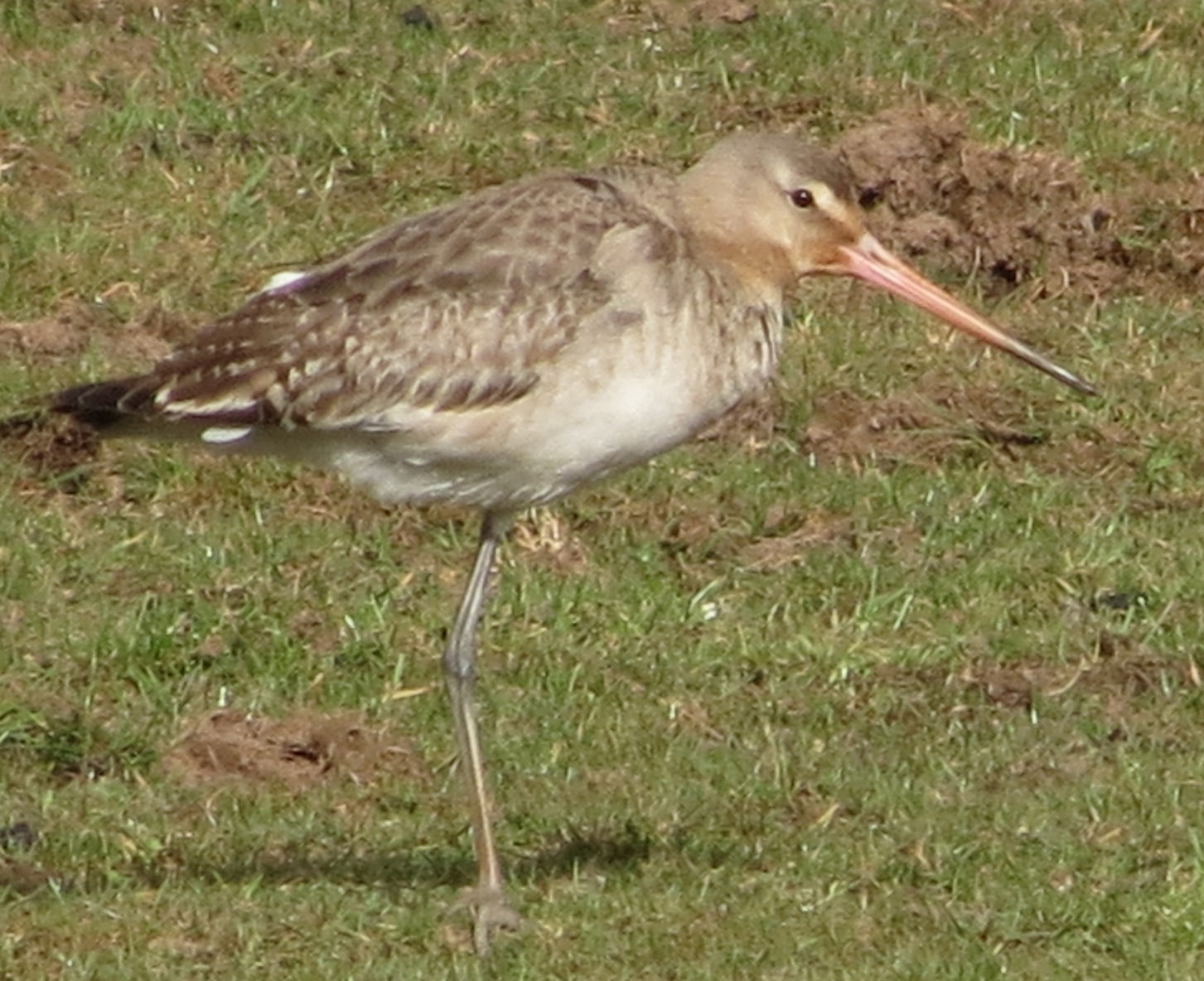
Here we have Black-tailed Godwits in their breeding plumage, showing off their red heads and breasts. In the middle of a long row of council houses is a gate leading to the allotments - and to a large scrape where these Blackwits roost over high-tide, sometimes almost a thousand of these large waders. Alongside the scrape is a local nature reserve, with pond, a wooded area, and (that rarest of things) a scrub area, with gorse, brambles, and small trees; just what is needed for warblers.
 
Happily posing for us near Leasowe is this common warbler - a chiffchaff. These can be present all year round, but really make their present felt when they begin singing their distinctive song. Really they should be called chiff-chiff-chiff-chaff-chiff-chaff-chaff-chiff's, but that's a bit of a mouthful.

And shortly after the chiffchaff begin to sing, the wheatears start to pass through. They stop off in the horse paddocks as they rest during their journey northwards.
 
Ranging a little further afield ourselves, we headed off to the Great Orme, a delightful place to see sea birds, and then on the plateau there all sorts of migrating birds passing through, as well as a wide selection of  scavengers.
Here we have a Jackdaw, checking out the area around the cafe. These intelligent birds are highly social, and are usually found in groups. Great Orme also hosts the Chough, another member of the corvid family, with a thin red beak that is used to probe the soil; when I get a decent picture, it'll appear here, I promise!

During the spring migration, the plateau is often full of resting migrants, here a male Stonechat. I don't think I've seen so many stonechats in one place before, often seen perching on a higher twig above the scrub to watch what is happening around. Meadow pipits are another common visitor at this time of year.

Listen carefully near the cliffs, and you may hear a low 'gronk' noise; not the chatter of the Jackdaws, not the angry 'craw' of the crow. This is the sound of a much beefier bird, the raven, largest of the corvid family. Usually seen soaring in the sky, I managed to find this one perched on top of a cliff overlooking the road.
 
Returning closer to home, in the last ten days or so, we have the joy of seeing a pair of Gagraney arrive at our local RSPB reserve. Usually they are only present for a say or two as they pass through, but this pair seems quite settled - perhaps they will stay, and breed here. Only time will tell. The male especially is highly distinctive with the grey side panel and bright white curved eye stripe. Head on the effect is quite dramatic, and the bird really stands out.

Meanwhile, overhead soar a pair of buzzards, softly 'mewing' as they go by. While they will take smaller birds, buzzards generally look for something to scavenge, the same kind of diet as the corvids, which does mean they are in competition, and can lead to corvids mobbing buzzards and other birds of prey, trying to force them from the area. In this case all was calm, and we could enjoy the view of this pair lazily scanning for supper.
 
Another spring returnee is the blackcap. Very distinctive once seen, the male has a black top, while the female has a brown top. They make a call somewhat like two stones being tapped together.

When we go Martinmere, the local WWT centrw, we usually keep to the 'wild' side of the reserves. Recently, though, we went there with some friends, a perfect excuse to spend some time looking through the 'captive' side of the centre.
Here we found some Baikal Teal, a brightly marked bird from the far east. Over winter one was seen on the Southport marshes, resulting in a lot of interest. The jury is still out as to whether it was a genuine wild bird, or an escapee from a private collection.

Equally well decorated is this male Mandarin duck. These dapper ducks are not native to this country, but sufficient have escaped and bred that there is a small but established population, and can be found locally.
The delight of the trip was this African gry-crowned crane - his fuzzy head gear looked most impressive, and gave him an expression of curiousity that matched how we felt looking at him!

Sunday, 5 May 2013

Spring has finally sprung

What a difference a few weeks make - a bit of warmth and things begin to change.
 
Those who have wintered here have begun to change into their summer clothes, and the migrants have begun to pour in... and pour out too..
 
Early in April this little chap was still present on Deeside, a Water Pipit showing off breeding plummage, a delicate pink underneath that the photo doesn't do justice to.
Talking to a local birder, there have been one or two of these scarce birds present in a specific small  area since at least the 1920's when they were first recognised. Obviously it's not the same bird each year - they would be almost 90!! And yet it seems that somehow the knowledge of this wintering ground has been passed on. How wonderful, and yet how fragile. I've not heard anything of this bird since, so presume he is on his way to his summer in the high mountains of Southern Europe.
 
I'd never really appreciated before how much birds change their plummage through the year. This Black-tailed Godwit has just begun to change, developing a browny-red around his head. These are a threatened species, yet in the Deeside/Wirral/South Lancs area they are one of our more common wading birds; a marker of how important the era is for wildlife, and how important it is to protect them.

Talking of markers, here is another one. While this particular bird looks a bit chilly, the Little Egret has been steadily moving into Britain from the Continent, probably as a result of Global warming. Twenty years ago they were occasional visitors; now there are some 70-80 breeding down at RSPB Burton Mere Wetlands. Each morning they disperse around the area, returning at dusk.

Evening walks have shown up many of the returning migrants; the local paddocks being a favourite for many small birds dropping in for a quick refill and a night's rest before continuing their journey. Here are Meadow Pipits and Wheatears. The Wheatears showing as small white blobs moving around the fields, scuttle and stop, scuttle and stop, while the 'mipit's have much better camoflage - there have been times when I thought the fields empty, and then as the eyes adjust, I've realised that there are dozens of these small birds moving through the ground.
 
The same fields have brought the occasional 'special' too. Around one of the pools that had formed in the paddocks was spotted this small wader, a Little Ringed Plover.
The hedges and trees have seen new occupants as well; if your ears are good you may hear the high-pitched whistle of Goldcrests. These tiny bundles of energy can be found deep in hedges and trees busily moving around. Trying to get a picture of one of these was deeply frustrating; they barely stopped still long enough to point the camera, and the autofocus would often pick on foreground twigs instead of the bird deep in the bush. I didn't think I'd got a picture, but when I loaded them to the PC, I found to my surprise this shot, catching one of the blighters just as it was lurching from one spot to another!
In one of the bushes near work (what else is lunch-time for?) was this delightful warbler singing away - a Whitethroat.
And drifting slightly from birds, the same lunchtime saw this Peacock butterfly rest on the path, literally before my feet.
It's a pleasure to see the Swallows and Martins back; I was amazed to see Swallow's drinking while still in flight, dipping their beaks into a puddle as they flew low across the fields. No, there's no picutre of that, not a chance! Instead just this shot of a Sparrow resting on the wires, a real sign of Summer evenings approaching.
As well as the usual suspects, these weeks have brought a few specials too. We treated ourselves to a day at Martinmere and were treated with views of a Spoonbill and of a Crossbill. Please excuse the poor shot of the Crossbill, but it was high in a tree, with just glimpses as it moved through the branches. Just visible are the distinctive overlapping tips of the beak, giving the bird it's name.

Last weekend we had the chance to drop in for a few hours at Arundel WWT, a chance to wander around some of the quieter corners, and let out some of the stress of the weekend. We heard the call of a lapwing, but this call sounded different. We soon spotted the bird, and then beside it we spotted some small bundles of feathers. And so for an entirely gratuitous 'cute' shot of a lapwing-chick.
And finally, to bring an overdue and consequently overlong blog entry to and end, a shot of a Wren, for no other reason than it brought a smile to our faces at the end of a long and hard day...


Wednesday, 27 March 2013

What a strange month...

"It's him again...  I thought he'd forgotten about us..." Nah - I've just been out and about, making the most of the weekends. For me one of frustrating things about the time of year is the lack of daylight hours in which to go birding. With a full-time job during the week, and being busy on Sundays in another capacity, Saturday is our one 'day out', so I've been concentrating on getting out as much as I can, making the most of the hours (more on that later).

Firstly a 'Thank You' to all the local House Sparrows - these cheerful chaps are rapidly working their way through a sack of black sunflower seeds and a tub of fatballs. If I'm a bit late up, and haven't refilled the feeders the previous night, they line up outside the bedroom window cheeping away - 'Dad, Dad, come and feed us, Dad, now Dad'! Once you start putting a feeder out, they get used to it and will visit each day; but that means a commitment to keep providing the food, and boy, can they munch seed!!  However, whatever the expense of the seed, it is more than repaid by the joy of seeing these beautiful birds... What they lack in plummage, they make up for in character - right Avian Scousers they are! Nationally there has been a huge decline, and it's gratifying that our garden has seen the numbers go from 2 or 3 to around 18...


 One Saturday saw a dash under the Mersey and up to the WWT reserve at Martin Mere. There are loads of captive birds there for the breeding programmes, but the birds that attract are of course the wild ones. The carpark saw Redwings and a Treecreeper, and there are large numbers of Tree Sparrows, with their distinctive chestnut cap - but no decent photos, sorry! Around the main scrape were large number of Ruff - this is the winter plummage, but just look at the patterns in the feathers... In the breeding season the Males gain a distinctive ruff around the neck - I can wait to go back in a month or so and get some more photos...
Of course, life in the wild is not always cute and cuddly - at the far end of the reserve a hide overlooked some beighbouring pools, and beside one them a dead swan attracted the attention of a nearby buzzard. We could see the buzzard diggin deep into the carcass, and tugging out the entrails - not quiet munching, but energetic pulling and tearing. Not pleasant to see, but this is part of natural recycling; the already-dead being reclaimed and reused, cleared up by buzzards and other carrion.

Another Saturday saw a visit to Burton Mere Wetlands, and it's associated Inner Marsh Farm. This reserve is a lot quieter (people-wise) than Martin Mere, but just as rewarding to visit. There are no breeding programmes here, just lots of waders, wildfowl and woodland birds. Here a Black-tailed Godwit rummages in front of the IMF hide, it's beak like a sewing-machine needle exploring the mud, feeling for food. Breeding colours are just starting to come through, and the range of plummage is astounding - it's easy to think that you're looking at 3 or 4 different types of bird, yet they're all the same; the long straight bi-coloured beak, the dark legs and black tail feathers, and a brownish back, mottled rather than streaked.

Also in the IMF pond, the Avocets have started to arrive. I'm surprised given the current cold weather that they haven't turned right round and headed back to warmer climes, yet here they are with their distinctive black-on-white markings, and upturned bills.

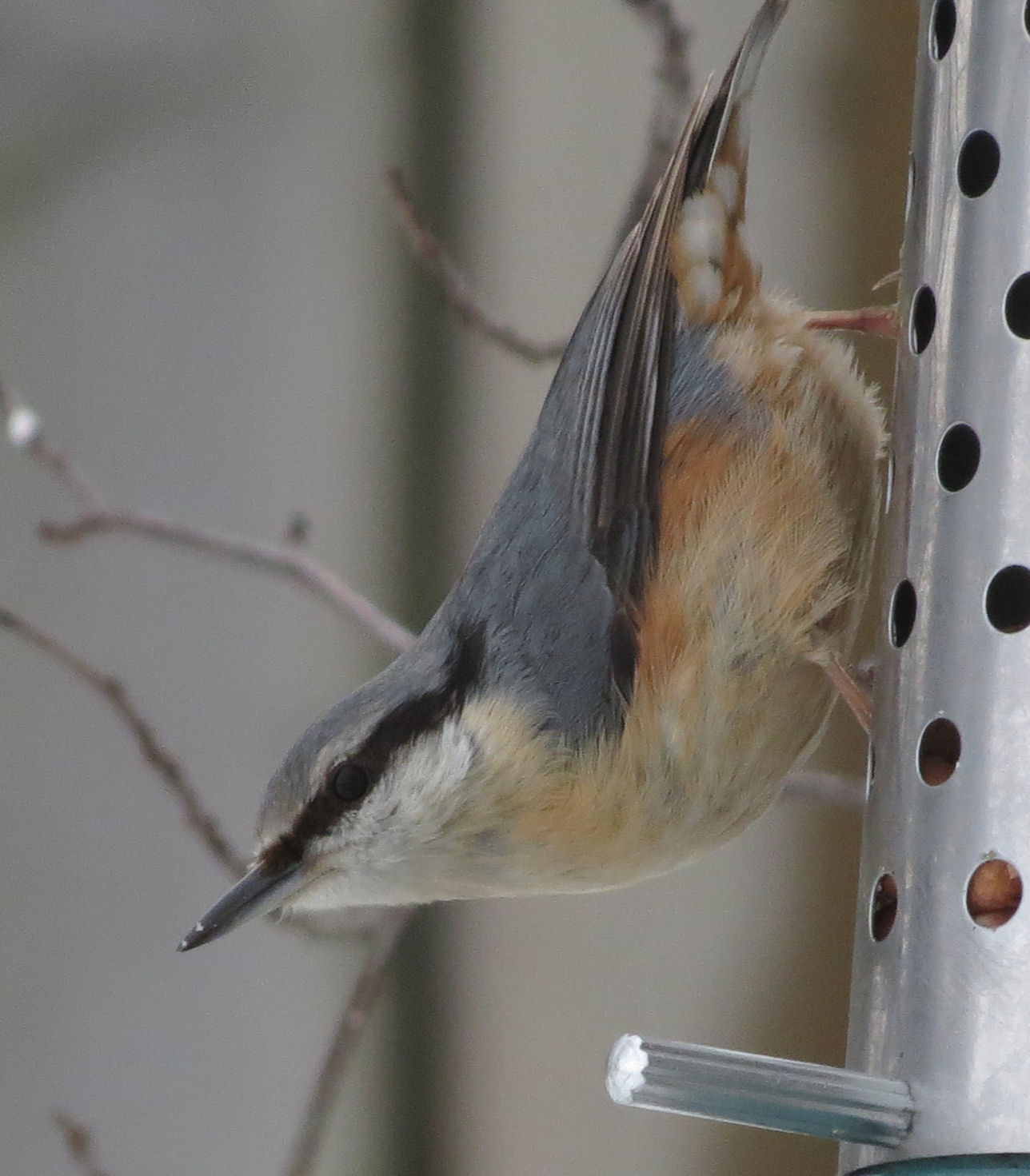
On the othe other side of the scrapes, in BMW proper, the feeders are alive with Siskins and Tits - and then this little gem appears... There's often a Nuthatch ot two around, but it;s rare that they stay still long enough to get a decent photo - most of them are just a blur of wings! This one oblingly sat and posed, and made me smile...

I mentioned making the most of the hours...  It was much to my other half's displeasure that I woke her up an hour before dawn, and we headed out into North Wales, very cold, and with snow starting to fall heavier and heavier.... And then all the early-morning grumpiness left as out of the snow we saw a small group of about half-a-dozen male Black Grouse in a rough circle, all with wings held out and curled, twirling around to flash their white tail feathers, and making little rushes towards each other - this wasn't the mason's but a 'Lek' - best description I can come up with is a group of teenage boys all squaring up to each other, showing off to the girls - no intent of harm, but a 'Look at me, I'm Top Dog' (Bird!). Well worth the trip, and a full English shortly afterwards was a further reward.
 
Finally,a plea for help.... two mystery geese. The first was at MartinMere - apparently a wild bird, but it could easily be an escaped domestic. The second was at Burton Mere Wetlands, but is not a resident - It has features of a GreyLag, with the beak, pink feet, and the neck/body markings - but then there's the white head markings, and it was in very close company of a Canada Goose - so I wonder whether it's a hybrid. Anyway, any suggestions would be most welcome...